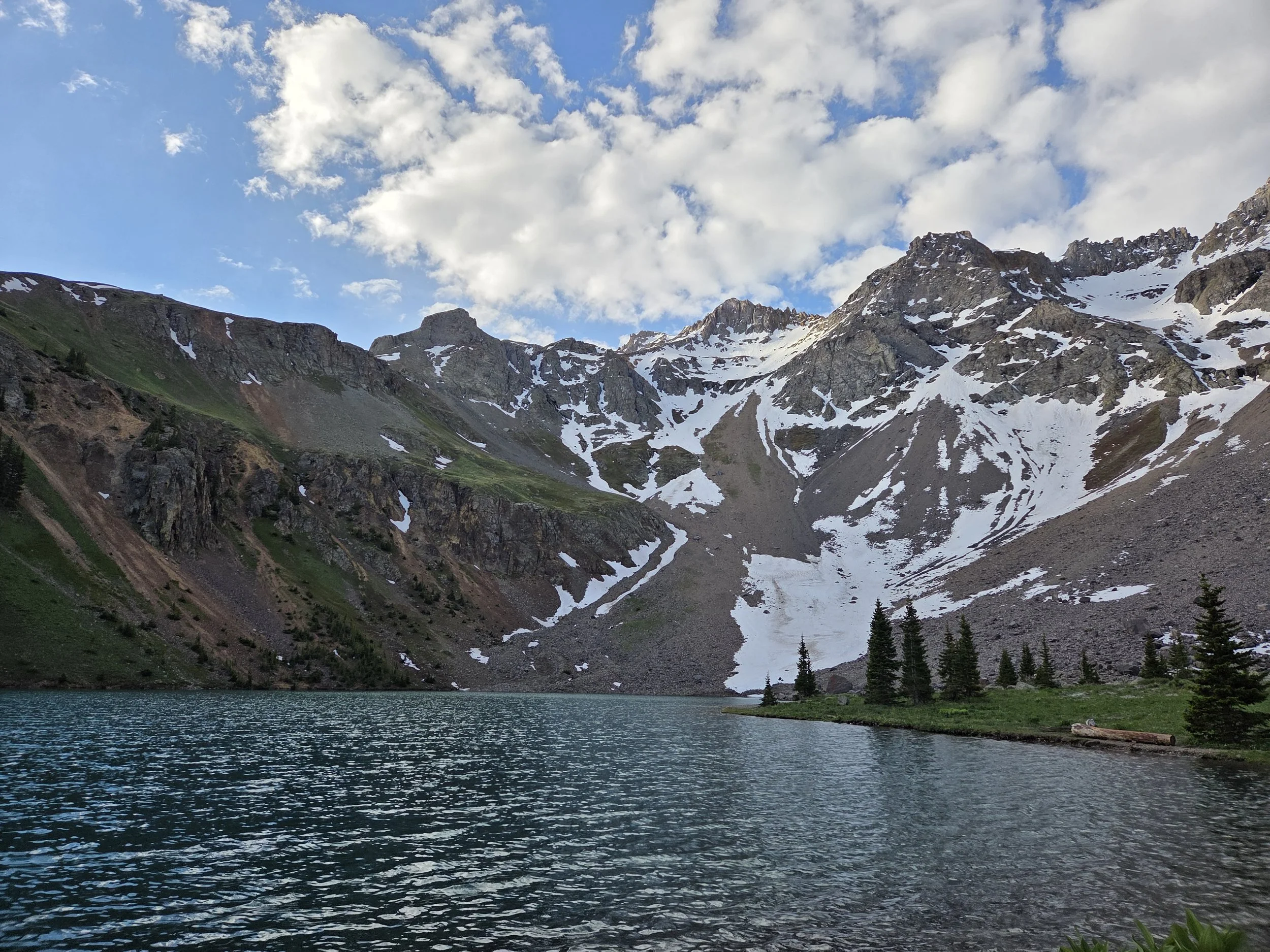
Segment 7
Mount Sneffels Wilderness
Distance: 40.1 miles
Vertical: +12678', -10989'
Highlights:
Blue Lakes
Mount Sneffels
Bridal Veil Falls
Main Challenges:
Scrambling up Mount Sneffels
Snow in early and late season
Scrambling Grade: Up to Class 3
Exposure: Moderate
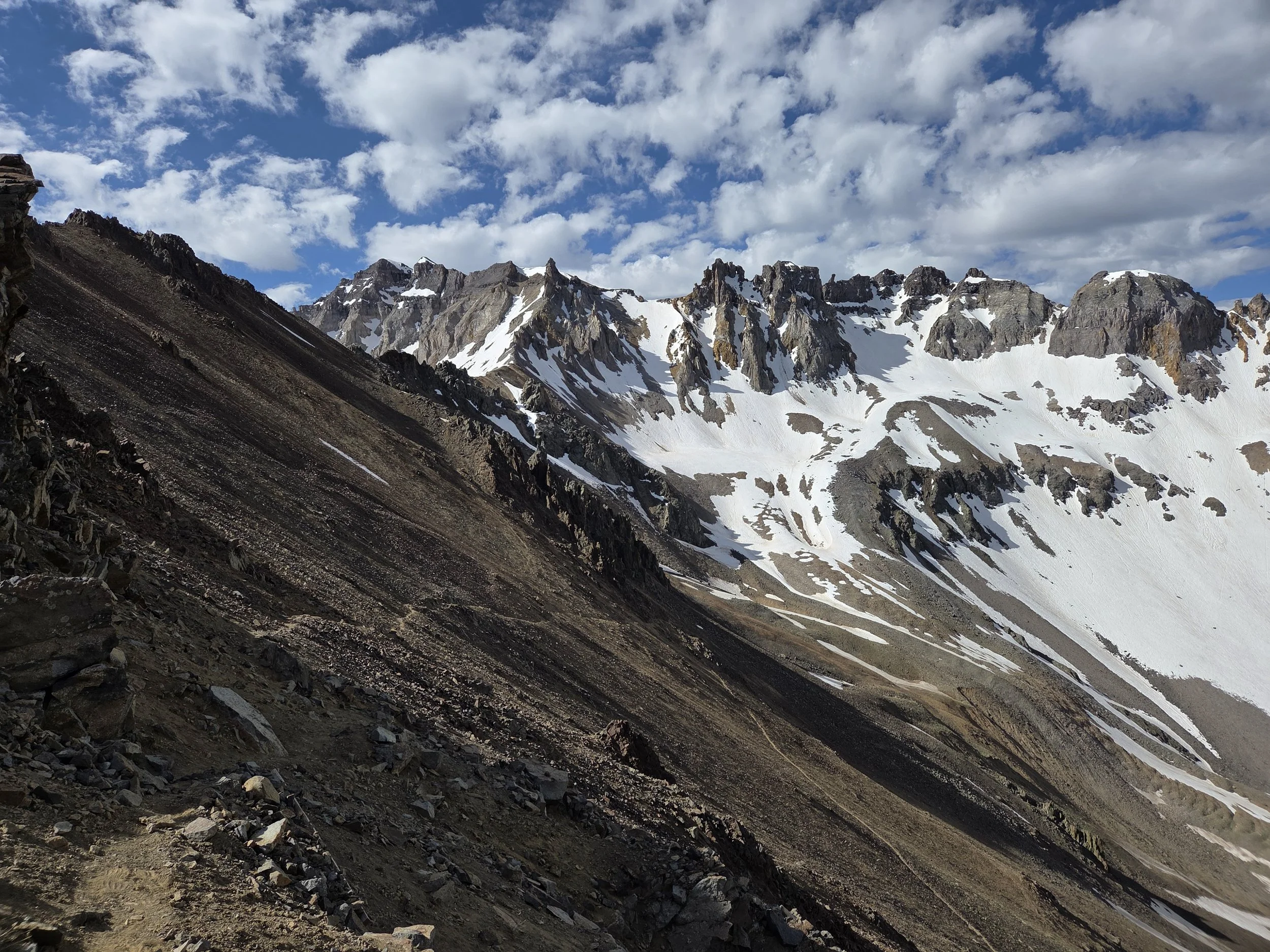
Blue Lakes Pass, Mount Sneffels Wilderness
This segment serves as the GCR’s grand entrance into the San Juans, starting off with Mount Sneffels Wilderness. After a dirt road out of Ridgway, join the Dallas Trail which provides a phenomenal view of Mount Sneffels from a short side spur.
Go for a swim in the aptly named Blue Lakes. From there, scale Blue Lakes Pass before following the ridge up Mount Sneffels—the mountain featured on the Colorado Driver’s License.
From there, descend Sneffels’ gully to Yankee Boy Basin and join Imogene Pass Road. The GCR then traces Mount Telluride’s ridge to Ajax Peak before descending Black Bear Pass Road to Ingram Falls, concluding with a tour of the beautiful Bridal Veil Falls near Telluride.
Loading map…
Logistical Considerations
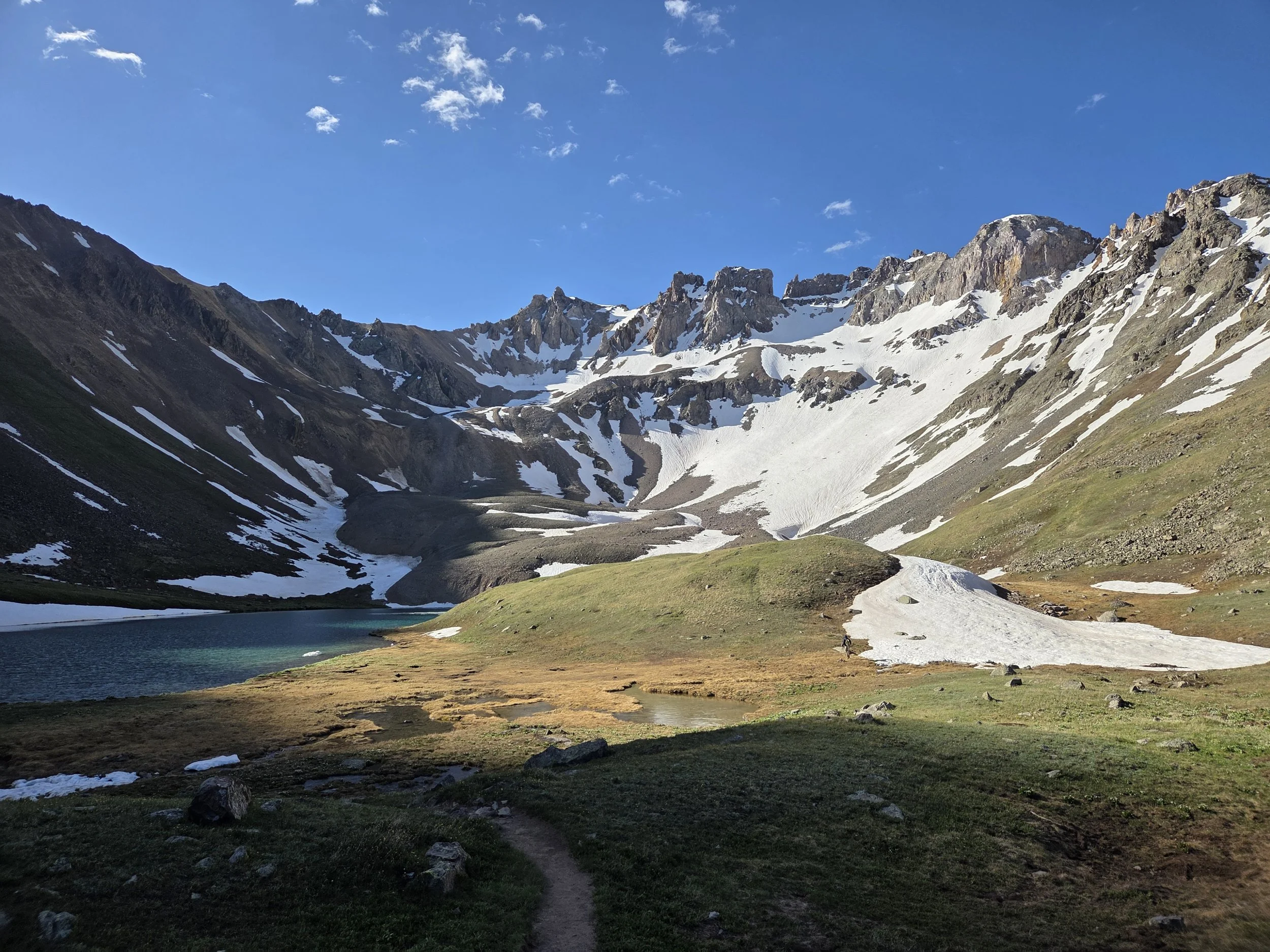
Upper Blue Lake
Seasonal Closures
We are not aware of any official seasonal closures, but high snow can make sections difficult or impassable without specialized skillsets.
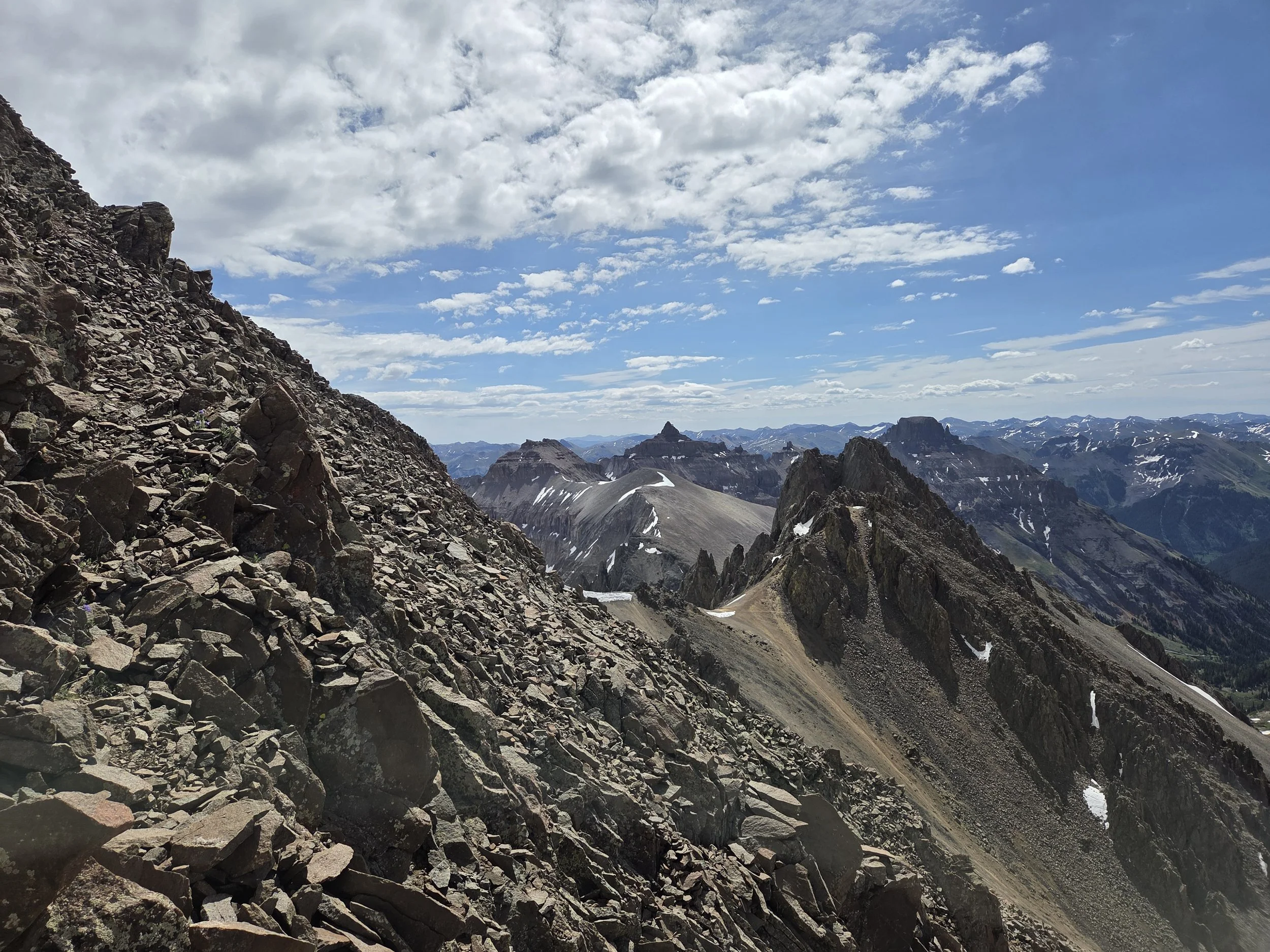
Southwest Ridge of Mount Sneffels
Permits & Fees
Blue Lakes Trailhead will start collecting fees in 2027. Information to be released.
Camping at Lower Blue Lake will require an online reservation starting in 2027. Information to be released.
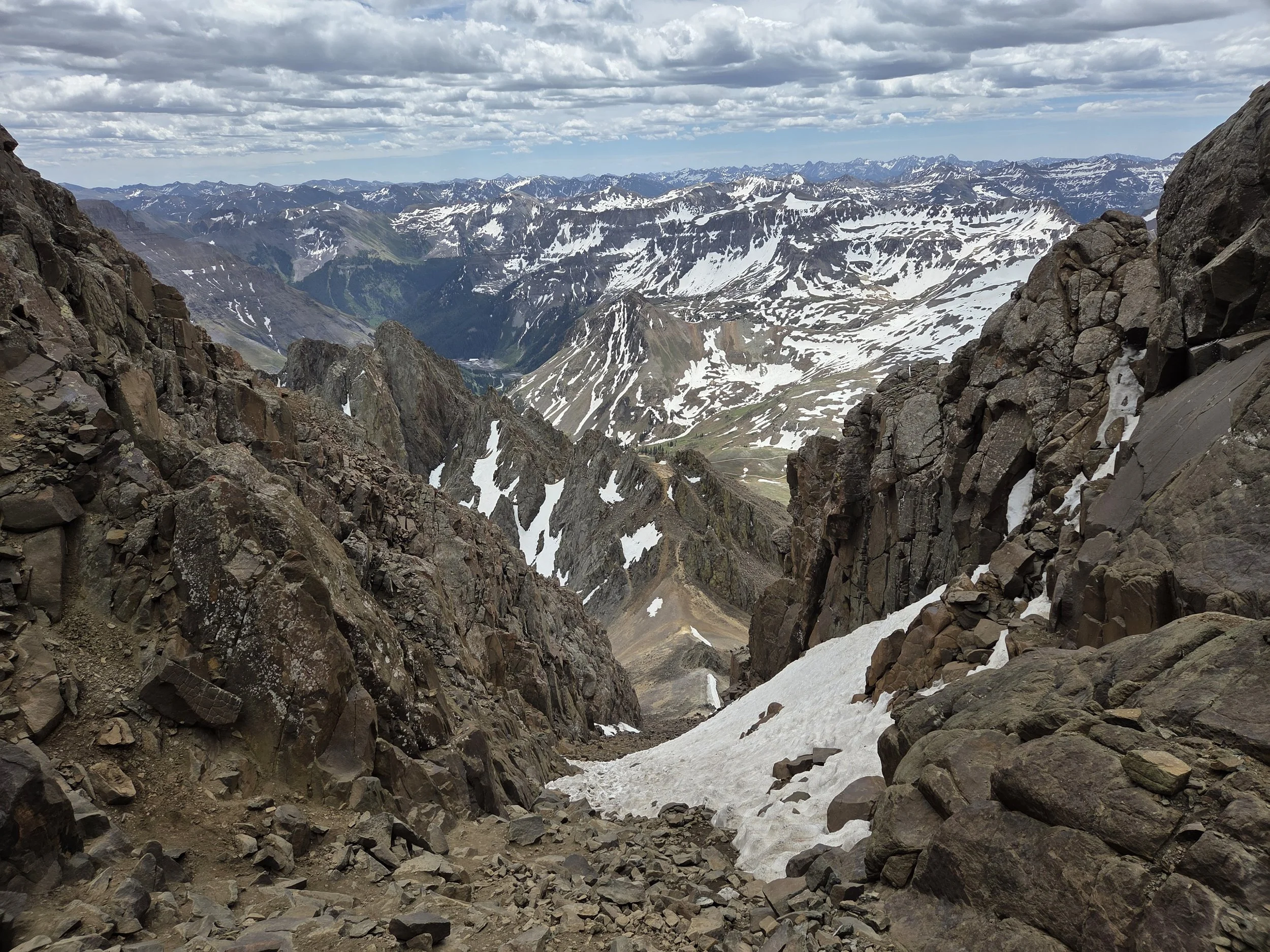
Southeastern Gully of Mount Sneffels
Water
Water is less problematic in this area, though be mindful of extended stretches above treeline and streams.
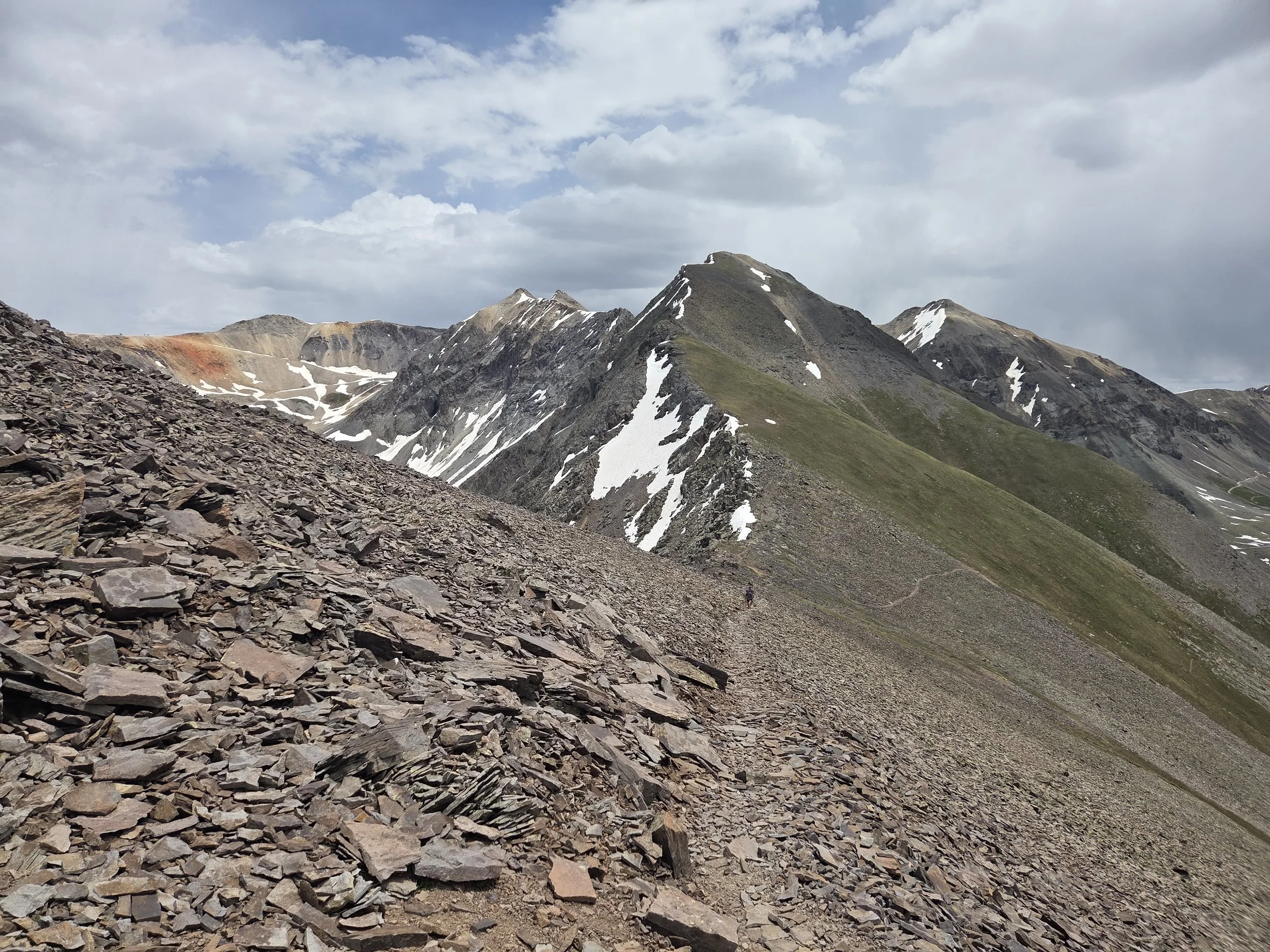
Mount Telluride
Camping
Blue Lakes Basin has several camping restrictions:
Designated sites only at Lower Blue Lake
Requires reservation and hard-sided bear canister.
No camping at Middle and Upper Blue Lakes.
Camping in Yankee Boy Basin is hard to come by due to private property.
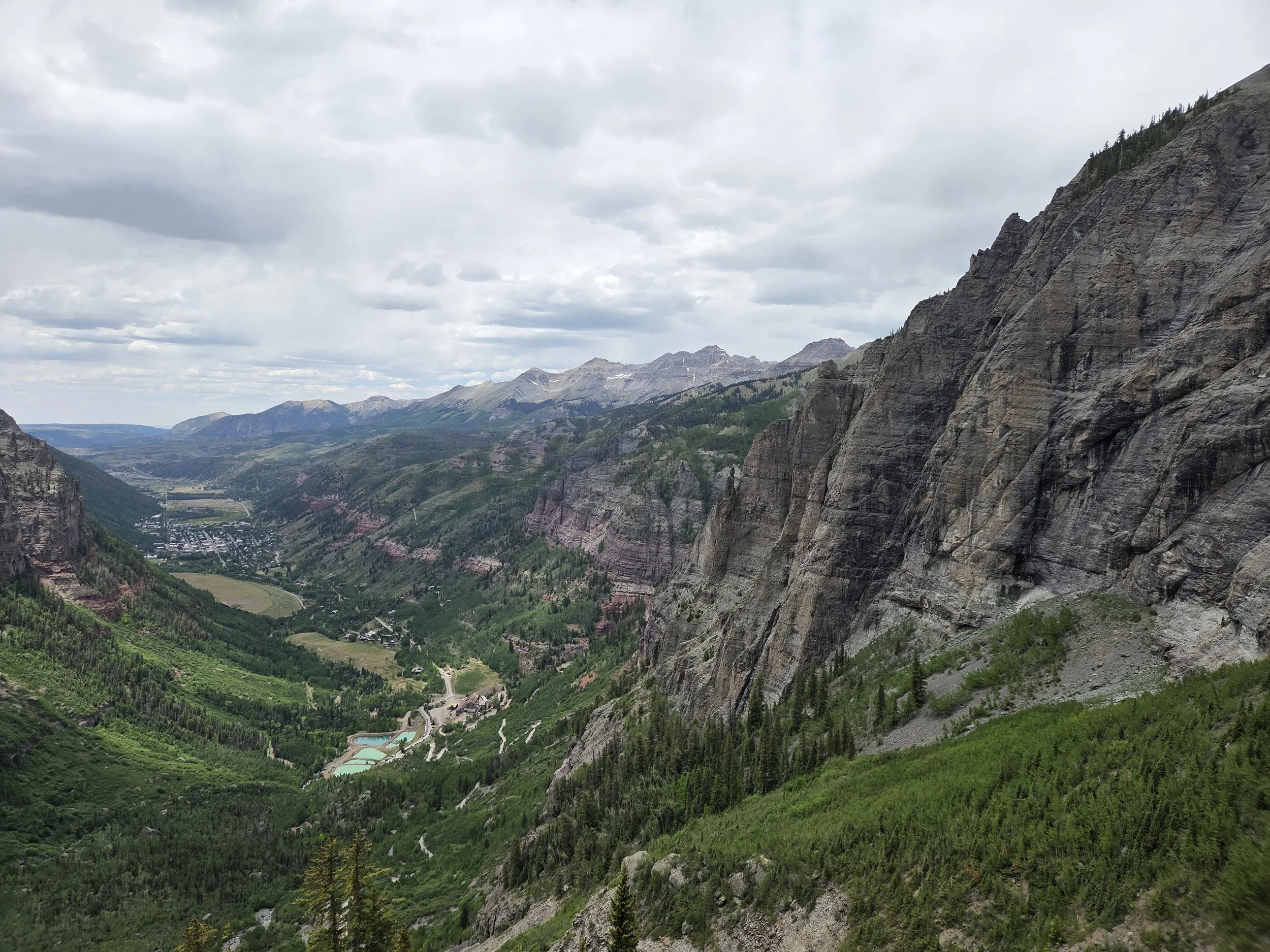
Telluride from Black Bear Pass Road
Other Considerations
Pack out human waste: A recently introduced rule requires that you pack out human waste in Blue Lakes Basin due to high E. coli rates in the lake from overuse.
Snow Travel: Thru hikers may encounter high snow levels when traversing this section and are encouraged to carry appropriate gear (e.g., microspikes and ice axe), know how to use them, and have backup plans if their planned route is unsafe or impassable.